
- English
- Español
- Português
- русский
- Français
- 日本語
- Deutsch
- tiếng Việt
- Italiano
- Nederlands
- ภาษาไทย
- Polski
- 한국어
- Svenska
- magyar
- Malay
- বাংলা ভাষার
- Dansk
- Suomi
- हिन्दी
- Pilipino
- Türkçe
- Gaeilge
- العربية
- Indonesia
- Norsk
- تمل
- český
- ελληνικά
- український
- Javanese
- فارسی
- தமிழ்
- తెలుగు
- नेपाली
- Burmese
- български
- ລາວ
- Latine
- Қазақша
- Euskal
- Azərbaycan
- Slovenský jazyk
- Македонски
- Lietuvos
- Eesti Keel
- Română
- Slovenski
- मराठी
- Srpski језик

Which Bathtub and Faucet Choice Makes Bathroom Upgrades Less Stressful?
Abstract
Shopping for a Bathtub and Faucet sounds simple until you’re staring at incompatible mounting styles, confusing measurements, and finish options that look great online but don’t stand up to daily use. This guide breaks the process into a clear, low-drama path: measure first, pick the right tub type for your space, match it with a faucet configuration that actually fits, and plan installation details before you buy. You’ll also get a compatibility checklist, a comparison table, and answers to common questions so you can choose with confidence and avoid the “we have to return everything” moment.
Table of Contents
- The pain points that cause most returns
- Measurements that prevent expensive mistakes
- Choosing the right bathtub type for your layout
- Faucet styles, mounting, and valves that matter
- The bathtub–faucet compatibility checklist
- Quick-match comparison table
- Durability, safety, and water considerations
- Installation planning without surprises
- Cleaning and long-term care
- Why the manufacturer behind the hardware matters
- FAQ
- Wrap-up and next steps
Outline
- Spot the common failure points: mismatched mounting, wrong spout reach, weak valves, tricky cleaning.
- Measure the room, rough-ins, and clearances before you fall in love with a design.
- Select a bathtub type based on space, usage, and installation complexity.
- Choose a faucet configuration that fits your tub and plumbing realities.
- Run the compatibility checklist and confirm accessories and parts.
- Plan installation and maintenance so your upgrade stays beautiful and functional.
The pain points that cause most returns
Problem 1: “It looked right, but it doesn’t fit.”
The most common mismatch is mounting: a freestanding tub that needs a floor-mounted filler, paired with a deck-mounted faucet; or a tub designed for a wall spout paired with a rim faucet.
Problem 2: Leaks and drips that won’t quit.
Many “pretty” faucets hide weak internals. A better cartridge, a stable valve body, and compatible connectors reduce ongoing drips, pressure issues, and repair calls.
Problem 3: The spout splashes everywhere.
Spout reach and spout height must match the tub geometry. If water hits the slope at the wrong angle, you get noisy filling, overspray, and mineral buildup on the rim.
Problem 4: Cleaning feels like a part-time job.
Tight faucet bases, rough finishes, and hard-to-reach corners turn routine wipe-downs into scrubbing sessions. Hardware layout and surface choice can make maintenance dramatically easier.
Measurements that prevent expensive mistakes
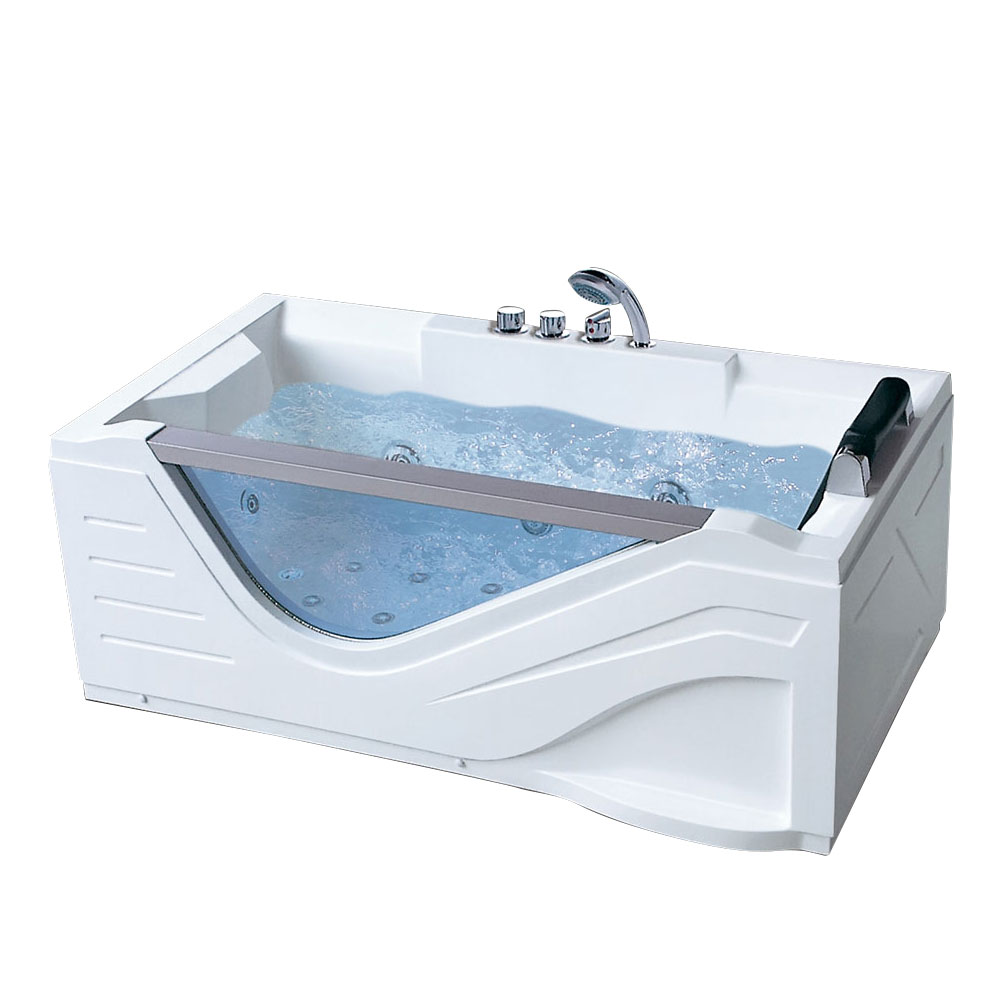
Before choosing any Bathtub and Faucet combination, treat measurements like your “non-negotiables.” A beautiful setup is only beautiful if it installs cleanly and fills the tub comfortably.
Measure these first:
- Bathroom clearances: door swing, vanity depth, and walking space around the tub.
- Tub footprint: overall length/width and the placement of the drain (center, end, or offset).
- Rough-in realities: where supply lines and drain connections can reasonably run (especially for floor-mounted fillers).
- Deck width or rim area: if you want a deck-mounted faucet, confirm there’s enough flat surface to drill and mount.
- Spout reach target: water should land inside the tub basin without splashing off the side slopes.
- Comfort height: step-over height matters for kids, seniors, and anyone who prefers safer access.
Quick sanity check: if your preferred faucet needs holes (or a mounting platform) and your tub doesn’t support them, you’re not “almost compatible.” You’re incompatible.
Choosing the right bathtub type for your layout
A tub isn’t just a shape—it’s an installation strategy. Pick the tub type that matches your bathroom’s constraints and your daily habits.
Common bathtub types and where they shine:
- Alcove bathtub: three-wall installation. Great for space efficiency and easy splash control.
- Drop-in bathtub: set into a framed deck. Offers a clean “built-in” look and supports deck-mounted faucets.
- Freestanding bathtub: strong design statement with open space around it. Needs thoughtful faucet planning.
- Corner bathtub: maximizes a tight footprint but can complicate faucet positioning and cleaning access.
- Walk-in bathtub: accessibility-focused; faucet placement and sealing quality are especially important.
Material notes (practical, not poetic):
- Acrylic: lighter, often budget-friendly, warm to the touch; avoid abrasive cleaners to keep it glossy.
- Cast iron: heavy and stable, excellent heat retention; installation must account for floor load and handling.
- Solid surface / stone resin: modern feel, often easy to repair for small scratches; follow manufacturer care rules.
Faucet styles, mounting, and valves that matter
Faucets are not interchangeable decorations. Your faucet choice affects water delivery, maintenance, and even safety. Start by choosing the mounting type that fits the tub and your plumbing path.
Mounting options (and what they imply):
- Deck-mounted (rim-mounted): installs on a tub deck or rim with pre-drilled holes; best for drop-in tubs or tubs designed for drilling.
- Wall-mounted: clean look and easy rim cleaning; requires correct in-wall rough-in and a tub positioned to match spout reach.
- Floor-mounted tub filler: classic pairing for freestanding tubs; requires stable floor anchoring and careful supply routing.
Valve and performance details worth caring about:
- Cartridge quality: a better cartridge usually means smoother handles and fewer drips over time.
- Anti-scald protection: pressure-balance or thermostatic controls help keep water temperature stable.
- Flow expectations: a tub filler should fill efficiently; a weak fill rate can turn bath time into a waiting game.
- Diverter options: if you want a hand shower, confirm how the diverter works and where the hose rests.
Finish reality check: “easy-to-clean” isn’t magic. A well-made finish plus gentle maintenance matters more than trendy naming.
The bathtub–faucet compatibility checklist
Use this checklist before ordering. It reduces returns and prevents installers from discovering problems mid-job.
Compatibility checklist:
- Mounting match: does the tub support your faucet’s mounting style (deck, wall, or floor)?
- Spout reach: will water land inside the basin without hitting a steep slope?
- Spout height: enough clearance to avoid splashing and allow comfortable filling.
- Hole configuration: single-hole vs widespread; confirm the tub deck pre-drill or drilling allowance.
- Supply connections: confirm connector sizes and whether adapters are required (avoid stacking adapters if possible).
- Drain alignment: confirm drain location doesn’t conflict with faucet placement or filler column location.
- Hand shower plan: confirm hose length, cradle position, and splash control.
- Maintenance access: can you reach valves, cartridges, and connections after installation?
If one item is uncertain, pause and verify. It’s cheaper to confirm now than to redo tile or reopen walls later.
Quick-match comparison table
Here’s a simplified way to match a Bathtub and Faucet setup based on common bathroom scenarios. Use it as a starting point, then confirm measurements and installation details.
| Bathroom Situation | Bathtub Recommendation | Faucet Recommendation | Why It Works |
|---|---|---|---|
| Compact space, daily showers | Alcove tub | Wall-mounted spout + shower set | Efficient footprint, easier splash control, straightforward cleaning. |
| Remodel with a built-in deck | Drop-in tub | Deck-mounted faucet (single or widespread) | Stable mounting surface, cleaner piping concealment, classic “spa” feel. |
| Design-focused master bath | Freestanding tub | Floor-mounted tub filler | Visual balance, flexible placement, strong statement when space allows. |
| Low-maintenance priority | Alcove or simple freestanding | Wall-mounted spout (minimal base) | Fewer surfaces around the rim to collect buildup and grime. |
| Family safety and stability | Alcove or walk-in tub | Pressure-balance valve + easy-grip controls | More predictable temperature, practical handling, safer routine use. |
Tip If you’re choosing a freestanding tub, decide the faucet style early. Floor-mounted fillers often require planning supply routes before flooring is finalized.
Durability, safety, and water considerations
A bathroom is a harsh environment: water, heat, cleaning agents, and daily touch. Your Bathtub and Faucet should handle that without becoming fragile.
Durability priorities that pay off:
- Solid internal components: stable valve bodies and reliable cartridges reduce long-term drips.
- Corrosion resistance: important in humid bathrooms and hard-water areas.
- Safe temperature control: consider anti-scald protection, especially for households with kids or elders.
- Surface practicality: smooth, wipeable shapes age better than overly ornate bases with tight crevices.
Hard water? Plan for it.
If mineral deposits are common where you live, choose finishes and shapes that wipe clean easily, and consider periodic gentle descaling (always follow care instructions for your specific materials).
Installation planning without surprises
Installation problems usually come from one thing: ordering first and planning later. A smooth install starts with choosing a system that matches your existing plumbing—or budgeting realistically to modify it.
Planning steps that reduce rework:
- Confirm rough-in requirements: wall-mounted and floor-mounted setups often require more precise positioning.
- Decide on access panels: for drop-in installations, access makes future maintenance far less painful.
- Pressure and hot water capacity: large tubs may require adequate hot-water supply to fill comfortably at bath temperature.
- Dry-fit mindset: installers often recommend verifying key clearances before final fastening and sealing.
- Sealant and waterproofing: proper sealing prevents hidden moisture damage behind decks and walls.
If you’re not confident about plumbing modifications, bringing in a licensed professional can save money by preventing hidden leaks and redo work.
Cleaning and long-term care
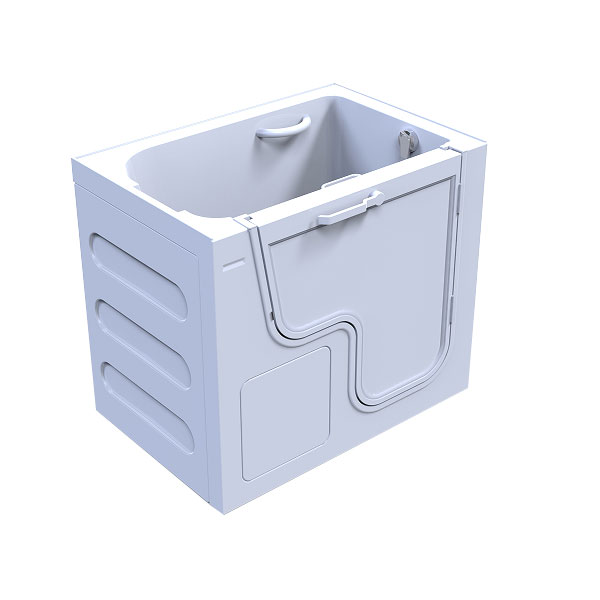
The best-looking Bathtub and Faucet is the one you can keep clean without heroic effort. Build a routine that protects finishes and keeps moving parts happy.
Low-effort care habits:
- Wipe after heavy use: a quick wipe reduces mineral spotting and soap film.
- Use gentle cleaners: avoid harsh abrasives that can dull acrylic tubs or scratch certain finishes.
- Check for early signs: small drips, loose handles, or slow drains are cheaper to fix early.
- Protect the rim: avoid leaving metal cans or rough objects on the tub edge that can scratch surfaces.
- Mind the seal lines: re-caulk when needed to keep water from creeping into joints.
Why the manufacturer behind the hardware matters
Even when two products look similar in photos, build consistency matters: machining, coatings, valve tolerances, and quality checks all influence how your bathroom performs years later.
If you’re sourcing a coordinated Bathtub and Faucet set for a project—especially for hospitality, real estate, or repeat renovations—working with an established supplier can simplify the process: consistent finish matching, clearer specifications, and better support for selecting compatible options.
Jiangmen Yanasi Sanitary Ware Co., Ltd. offers coordinated bathroom product solutions designed to help buyers avoid the most common mismatch issues—mounting conflicts, awkward spout reach, and finish inconsistencies—by making it easier to choose a setup that fits both the space and the installation plan.
Buyer tip: When comparing options, ask for clear specs on mounting, dimensions, and included parts. “Complete set” can mean different things from different sellers.
FAQ
Q: How do I know if my tub can take a deck-mounted faucet?
A: Check whether the tub is designed for drilling or has a dedicated deck/rim area with enough flat surface. Many freestanding tubs are not intended for deck-mounted hardware, so a floor-mounted filler or wall spout is usually the safer plan.
Q: What causes splashing when filling a tub?
A: The most common causes are incorrect spout reach, spout height, or the water stream hitting a steeply sloped surface. Matching spout geometry to the basin shape reduces splash and noise.
Q: Should I pick a tub or a faucet first?
A: If you’re choosing freestanding or wall-mounted options, decide the faucet strategy early because it affects rough-in planning. For drop-in tubs with decks, you have more flexibility—but measurements should still come first.
Q: Are thermostatic controls worth it?
A: If you care about stable temperature (especially with kids or fluctuating water pressure), thermostatic or pressure-balance options can be a meaningful upgrade. They can improve comfort and reduce sudden hot/cold swings.
Q: What’s the easiest setup to keep clean?
A: Typically, a simple tub profile paired with wall-mounted hardware (where suitable) minimizes clutter on the rim and reduces crevices where soap film collects.
Q: What should I confirm before my installer arrives?
A: Confirm mounting type, hole configuration (if any), supply connection sizes, valve requirements, spout reach/height, and whether you need an access panel. Having parts on-site prevents delays and last-minute substitutions.
Wrap-up and next steps
A well-matched Bathtub and Faucet setup should feel effortless: comfortable filling, stable temperature, easy cleaning, and no “surprise” compatibility problems. Measure first, pick the tub type that fits your space, choose a mounting style that your plumbing can support, and run the compatibility checklist before you place an order.
If you want help selecting a coordinated set for your project—whether you’re upgrading a home bathroom or sourcing for a larger build— reach out to Jiangmen Yanasi Sanitary Ware Co., Ltd. with your layout and preferences, and contact us to get a practical recommendation and product options that match your installation plan.